Veil Solo
October 18, 2010 § 1 Comment
I did my very first completely improvised veil solo the other day. I performed it at a diversity convention for realtors. It was in a large conference room with tables set up with food and goods from various cultures, free henna hand painting, and diverse door prizes that were donated from shops around town.
A few of us dancers were going to perform. We were doing American Tribal Style, a couple drum solos, a sword piece and a skirt dance. My troupe director asked if I wanted to do a solo, and I said sure! I looked at the set list and thought a veil dance would round out the lineup nicely.
I have had some veil experience. I have performed veil a few times with a choreographed group of dancers. I have taken multiple veil workshops and classes and I have played around with veils a bit. This was my first time performing a veil solo. More importantly, it was my first time performing an improvised veil solo to live music. I watched some youtube videos the night before to get some ideas and get a refresher on veil options. I didn’t know what song I would be dancing to until I showed up to the run-through, so I couldn’t do a lot of practicing.
I knew I wanted to dance with the veil wrapped around the arms some to add variety and keep the veil out of the way for part of the dance. I decided to start the dance that way so I wouldn’t forget to do it. I also planned to use the veil from the end for some long veil work. But that was as much planning as I did. I danced through the song once during our run-through. Before I started, my troupe director said, “you don’t have to do all classic veil.” I said, “I don’t know what I’ll do, I have no idea what my veil style is.”
I think the piece turned out well. I love the song the musician played on the accordion, Imate Li Vino. The version he played is slow, pretty and expressive. It’s one of my favorites, even though I’ve only heard it a few times before, but that really helped. I was “in the zone.”
My entrance felt a little rough. I wasn’t flowing with the music yet, but after the first half a minute or so, I was only really aware of the veil and the music. Total flow. Especially after I completely unraveled the veil and went into full veil work. I twirled and spun and tossed and moved the veil with the rises and falls in the melody. I was just feeling the music and danced until I felt done. I’m not sure what all I did, I just danced.
After, I asked my fellow dancers how long I had danced for and they said about 3 minutes which is, in my opinion, a perfect length for a solo. I was lucky that the song is very cyclical so the musician could add however many verses I needed him to. I entered after the song started and left before it finished. I had pictured myself as a figment of the imagination, as if the musician dreamed me. An apparition. A consequence of the melody.
Spirit of the Tribes 10!
October 3, 2010 § Leave a comment
(My belated Spirit of the Tribes post…)
I went to Spirit of the Tribes in Ft Lauderdale, FL for Memorial Day weekend. It’s quite a drive from North Alabama. 14-16 hours. The drive was good, though. I drove with some troupe mates so there was a lot of bonding time. And I saw a couple of amusing things such as this
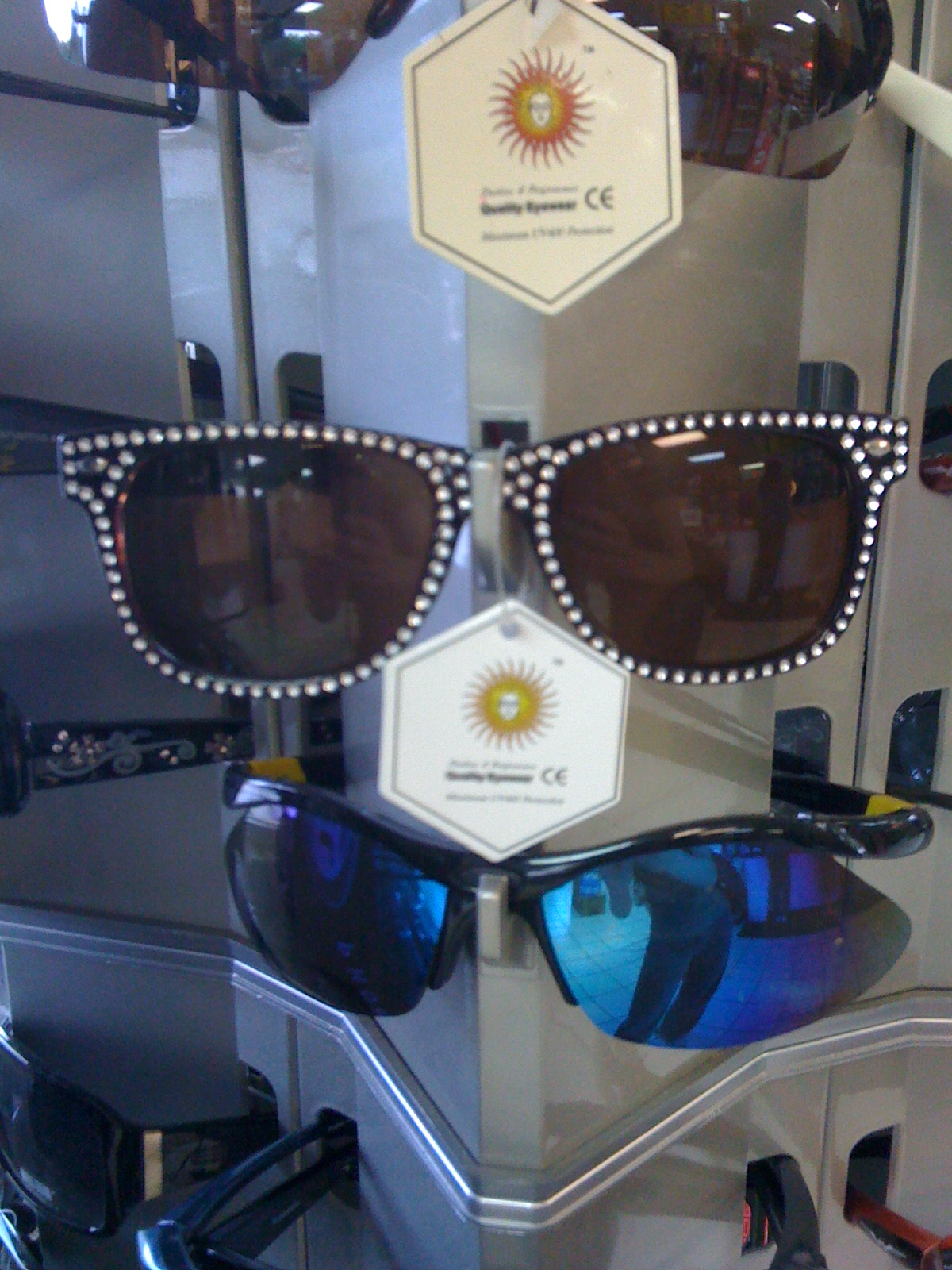
These are so tacky they’re awesome!
and this

Someone has a thick accent…
It’s been awhile since I’ve been to Florida. It is very hot and humid, but very green and pretty. One thing I forgot though, Florida kind of smells. Not intolerably, but it has a very distinct smell. I think it’s all the swamps.
Anyway, we arrived at Spirit Monday morning after driving the whole previous day and only stopping for about 4 or 5 hours sleep the previous night at a friend’s farm. We arrived just in time for classes to start.
My very first class was with Unmata, who I love! Though I’ve seen them perform many times, this was the first time I actually got to take a workshop with them. It was fun and fast paced. We learned a high speed (of course!) combo that is very different from styles I have done previously. It was a good class, but it is very hard to keep up with Unmata when you’ve only had a few hours sleep! Somehow, I held on and made it through the whole workshop.
Next, I took a Belly Baile combos workshop with my first teacher, Myra Krien. It was really great to be back in her class and I still find it very easy to follow her. Her teaching style and body movements are still so familiar. Belly Baile is not what she taught when I took classes from her. This is her own unique fusion dance style that is a beautiful and artful combination of the various dance forms she has learned over many years. The combos have texture and are very beautiful. She sells a DVD on her website with the combos. I definitely recommend it.
The second day, I took a workshop from Devyani about favorite ATS combos. Their classes are always good. Megha is a very precise teacher. This is the third or fourth workshop I have taken from them. I got some cue subtleties cleared up. The difficult thing for me in ATS workshops at big events like these is there are always a lot of people who are not very familiar with ATS, and it’s a little hard for them to get the combos and ideas. Not that I would discourage beginners from taking the workshops. It’s just hard to work through the exercises when someone in the group doesn’t already know the basic concepts of ATS. I still always learn something, though.
After the Devyani workshop, I took a class in pops, locks, and layering with Kaya. I thought Sadie was supposed to be at the event as well, but for some reason it ended up just being Kaya. This was perhaps my favorite workshop of the event. It was challenging and a great workout. I have never gotten such a focused oblique workout. That night and the next day, my obliques were very sore. Just the obliques, not all my abs. Not any other part of my body. Just the sides of my torso. So, the drills really isolated the obliques. Kaya told me twice during the workshop that I was doing a good job. It was one of the highlights of my trip!
The last day of the event, I took a workshop on Romani Gypsy style with Artemis Mourat. This was my second workshop with her. I love the Romani Style. It is actually not really intended to be performed, but is just the dance of the people. It’s less flashy than some other styles. Artemis said on a scale of intensity, if Oriental belly dance is a 10, Romani Gypsy style is a 6. She said she thinks people should be careful when saying they are doing a “Gypsy” belly dance piece if they’ve never actually learned anything about real Gypsy dance. She said, just because you have a big skirt doesn’t make it authentic. You could call it your Gypsy-inspired piece, but learn about the real style before you call it a Gypsy dance. I love Artemis and her workshops, but I still feel oh so white when I try to dance like her.
Finally, my last class was with Dalia Carella, who is just delightful. The class was an El Mundo fusion dance class. It was a very fun style with a lot of Latin influence. Lots of sassy skirt work. The dancing was flirty and spicy. It brought me visions of life in the tropics and made me wish I lived in a culture that danced more. It was a perfect end to my Spirit workshop experience.
There was a great vending area of course. I didn’t buy anything. The one costume piece I was looking for was a skirt to wear with my bedlah for Oriental belly dance. A fusion festival is apparently not the place to find a bunch of those.
There was a show every night. It was a showcase of various levels of skill and styles from all over. Some of my favorite performances were by Anasma, Beat Box Guitar, Danyavaad, Nanda Najla, and Shakra Dance Company. The shows were full and entertaining. They were also expensive. $35 per show. If I hadn’t been working at my dance teacher’s vending booth in exchange for tickets to the shows, I wouldn’t have gone to every one. I would rather spend more money on workshops, which were actually cheaper than the shows.
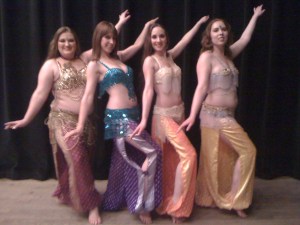
Lumani post-performance
My troupe performed Sunday night. We closed the show. The performance went well. The Sunday night audience was smaller than Friday and Saturday, but it was a good crowd. I didn’t like that there was no outside photography or video. So if you want pictures or video of your performance, you have to buy them from the professionals. I will not buy any, myself. I just disagree with the idea. I understand why you can’t just video tape the whole show, and requesting no flash photography, but no snapshots? Sure, if a professional photographer takes an absolutely beautiful picture and it’s a must have, I’d pay for it. But I disagree with being forced to buy them. Besides, I’m a performer. I have plenty of pictures of me performing, many of which have been for free or for trade.
On another note, when I read the description of the event and the hotel on the website, I was under the impression the hotel was within walking distance of the event hall. It was not. So, if you plan on attending Spirit, plan to carpool or rent a car.
The most fun I had at the event was hanging out with my troupe. There was a lot of bonding and a trip to the beach. It was great fun. And I was so happy to get to take a dip in an oil-free part of the ocean. I love beach frolicking!
Hoop Dancing, Belly Dancing and Public Perception
September 26, 2010 § 1 Comment
I have been getting a little more into hoop dancing lately. I have taken a workshop and now own a hula hoop. It is so much fun!
I was talking with a fellow belly dancer who is now also hooping about hooping vs. belly dancing the other day. We have both been belly dancing about the same amount of time (her ten years, me nine). We were discussing how one of the great things about hooping is that you don’t have to worry about having to explain it to people, having to educate people, or having people get the wrong idea.
With belly dance, you have to be careful about how it’s presented and in what venue. There are so many incorrect or negative preconceived notions about what belly dancing is about and what the intentions of the dancers are. It is often stereotyped as a dance of morally loose women or a dance of seduction and sexuality akin to stripping. Belly dancers often struggle with the way the general public perceives them and the art form. Sadly, many belly dancers don’t share the fact that they belly dance with people in other parts of their lives because they fear the reaction.
With hula hooping, everyone knows what it is. No one will see a hula hooper and react with “what the heck are they doing? They are amazingly keeping this big, circular thing rotating around their body! How crazy!” Everyone knows what a hula hoop is, what it’s used for and there aren’t general negative ideas about it. It would be gladly accepted at any venue. Someone could even do a provocative dance with a hoop, and it won’t make anyone think all hoop dancers are loose, because the hula hoop image is already established in our culture.
It presents a very nice sense of freedom that is not always there with belly dance. I can feel more relaxed about it. And never worry about what someone might think.
My Reaction to Carolena’s “ATS Old School, ATS New Style”
September 26, 2010 § 3 Comments
I feel like I should comment on Carolena Nericcio’s recent announcement on her blog about the way we can now define ATS. It has caused quite the stir in the ATS community. In a nutshell, she announced that she no longer wants to police the dance and that new additions to the dance would be accepted. The basic moves in ATS (as seen on Volumes 1-4 of the Fat Chance Belly Dance DVD series) will be considered the base for ATS and everything on the newer DVDs and whatever people add in their own troupes will be considered new ATS.
It seems like some ATS dancers were upset about the announcement. They feel like the dance form will become diluted and it will become harder to dance with ATS dancers from other areas. I also got the sense that some dancers who have been through Fat Chance’s certification program felt that their certification will mean less now. There were also some people who took offense to Carolena’s use of the term “old school.”
First let me address the latter. I feel like this is a silly thing to focus on, and not really the point, but it seems many people did, so I want to comment. I know Carolena has already said she didn’t mean “old school” as a term of disrespect. I have to say that I don’t get a negative feeling from the term. Old School is the roots. It’s where the Masters come from. Old school doesn’t mean something’s out, it’s more like it’s so far out, it’s back in again. Okay, just had to get that out of the way.
Now, let me say that I am excited about the announcement. This is how it was when I began learning ATS nine years ago (at least as far as I was aware). My teacher did a great job of staying true to the style, while adding clarity to cues and transitions where our troupe needed them to be a tighter, more together group. We also created a few of our own combos within the ATS language of movements so we could do fancier things with our dance. Some changes didn’t happen on purpose. Some parts of movements became slightly emphasized or de-emphasized as part of the natural reaction to trying to be uniform with each other. Change happens in art.
At that time, you did see many variations on the ATS idea at Tribal Festivals. There was also a lot of move sharing at the festivals back then. This was before the festivals were completely dominated by the newer fusion styles. ATS was in a major place of growth. So as far as whether or not the dance form will become diluted, well, I imagine not any more than it already has.
I agree that some troupes who call themselves ATS are so far from the style and language of Fat Chance that it really is something different. Improvisational does not mean it’s ATS. ATS is based on a very stylized set of moves and a particular format. It has a particular timing and way of transitioning between moves. The arms, the posture, the formations, and the timing make ATS very distinct. If you vary from this by a wide margin, it is no longer ATS (in my humble opinion). However, I think if you are consistent with the style, add a cue that is consistent with the format and add something fancy such as a turn, I still categorize that as ATS. As long as you don’t lose the things that are fundamental to ATS. This way, the language can be added to and be allowed to grow, without compromising the style. Some people will do this more artfully than others, but that is true with anything.
There are also some troupes who have a beautiful dance style, who call themselves ATS, but are completely different from Fat Chance. Most prominently in my mind is Gypsy Caravan. I hear they are no longer together, but they have a whole series of DVDs that is a completely different language of movements, but they have used the name American Tribal Style for so long, it would be hard to tell them to change it now. Gypsy Caravan was awesome to watch perform, but it was entirely different. Paulette Rees-Denis, the director of Gypsy Caravan, was an original member of Fat Chance, and when she branched off she really did just take the concept and change the moves entirely. I refer to their style as “Gypsy Caravan style” or “Gypsy Caravan technique.”
Let me also say that I am not certified with Fat Chance. I would love to be, but it will be quite some time before I could even picture myself in a financial position to do so. But I still have a lot of experience with ATS. My teacher had a lot of integrity in the dance and was pretty consistent with the DVDs. We used to bring in Carolena for a series of workshops every year, and what we were doing was not that different from what she was doing. I would also like to say that it doesn’t change anything for those who are certified. They are still certified with Fat Chance. It still says a lot. They still have credentials where many do not.
I did feel a little bad when reading Carolena’s blog post. I felt bad that she seemed to feel like the dance community did not listen to her when she asked that you do it like her or call it something else. It was never my intention to disobey the dance creator’s wishes. As soon as I learned of them, I would scrutinize and worry and try to make sure everything I was teaching my students was consistent with Fat Chance, because I had an excellent teacher, but did not learn it all directly from Carolena. And there were some things that I felt were consistent with the style, a fancier combo, or an arm variation option, or a clarified cue to make my dancers more together, that I didn’t want to completely give up, so I made it very clear in my class when something was not 100% exactly like Fat Chance (or “traditional ATS”), so my students would know. Also, I will never stop dancing on both the right and the left, for the health and balance of my body and my students’ bodies. I feel very strongly about it. I know that some ATS dancers would probably say that this alone means I was not doing ATS, but ITS–Improvised Tribal Style.
I am very grateful for Carolena’s recent decision. I can stop doubting myself. I can stop scrutinizing. I can stop worrying about whether or not I am teaching ATS, or ATS based on Fat Chance ATS, or ITS, or ITS with some ATS, or ATS with a little ITS. I think Carolena has done a wonderful job of clarifying the standards and boundaries for the category of ATS. We know what our fundamental moves, cues and transitions are. They are everything the dance is built on. They are the foundation and we should stay consistent with the style and format, but are now free to create.
Thank you Carolena, for setting us free and allowing us to grow. I will do my best to represent the dance form with integrity and beauty.
***Update: It has been brought to my attention that Gypsy Caravan does not identify themselves as American Tribal Style, but simply as “Tribal.” Black Sheep Belly Dance is another well-known troupe who has a unique language, but used similar ideas as ATS. As I understand it, they used to call themselves American Tribal Style, but dropped the “American” part and settled on just “Tribal Style” as per Carolena’s request. I actually can’t think of any other extremely well-known troupes who use a completely different language of movements who refer to themselves as ATS.***
ATS: If It’s Not Right, Is It Wrong?
May 27, 2010 § Leave a comment
American Tribal Style Belly Dance is a right side dominant dance form by design. The dancers are always turned slightly so their right side is more visible to the audience. Some moves, such as the Basic Egyptian, are very symmetrical so the two sides of the body are worked evenly. Other moves are not symmetrical such as the choo-choo, a hip bump that is always done with a weighted left leg and unweighted right leg and the right oblique working more than the left. Another is the Arabic Undulation, always done with the right foot in front. I am not sure that this is the healthiest thing for the body. I don’t know of any other dance form that works one side of the body more than the other. You wouldn’t go to the gym and lift weights with only your right arm, so why would we dance in a way that works out the right side more than the left?
I was lucky to begin my dancing with Myra Krien who is also an Oriental Style trained belly dancer and had thought it was not healthy to dance this way. She had designed a way to switch sides so we could also do ATS left side dominant. I still use this technique in my dancing today. Most students are right-handed so the right side is more comfortable for them, but it is important to get an even workout.
When I began ATS, my class would do what was easiest and dance on the right more. Later that year, I was injured while playing soccer in my high school P.E. class. I saw multiple doctors to help me through different stages of my healing. I saw an orthopedic doctor who said one of the problems was that my pelvis popped out of place and he sent me to physical therapy. Another doctor I saw was a cranial sacral specialist. He told me that the muscles in my sacrum were not equal in strength and it was causing my hips and pelvis to twist to one side. I told him about the style of belly dance I was studying and told him we end up dancing more on one side than the other. He told me I should work on building up the muscles on the other side, even if it was just during practice at home. After I told Myra about this, she was much more strict about making us practice both sides equally. Now that I am teaching ATS, I teach both the right and left side as it was taught to me and make my students practice evenly in class.
I believe the ATS community should adopt a more evenly strengthening approach to the dance. I have heard that Carolena Nerricio, who developed the dance form, is an avid gym visitor, so perhaps she builds her muscles evenly enough in other forms of exercise that it does not have adverse effects on her body like it did mine. A lot of people use dance as one of their main forms of exercise and do not have the time or motivation to get in as much gym time, so I think it is important that we workout evenly in dance class.
Adding left-sided ATS is actually quite easy and does not have to interrupt the improvisational choreography. What my teacher had come up with were a couple of moves based on the existing vocabulary that could cue a switch to the left. The transitions are really quite seamless. When dancing on the left, we use the same vocabulary and formations as on the right, only mirrored. This can be done when dancing to fast or slow music.
Here is a video of me and my students dancing at Panoply this year. The first song is performed by my ATS Basics students, with me leading them on the right (the traditional ATS way). The second, slower song is performed by two of my ATS Beyond Basics students on the right. I join them for the final, faster song and lead them into dancing on the left. (The switch happens at 4:37.)
Mirror, Mirror…
April 16, 2010 § Leave a comment
I’ve had an interesting journey with the way dancing feels versus the way it looks.
When I first began dancing away from a mirror (in performance, for example), belly dance was still very new to me. When I didn’t have a mirror to look at, I could still tell I was doing a move because I had to put a fair amount of effort and concentration into it.
Later, around my third or fourth year of dancing, I went through a strange transition. Many moves had started feeling more natural, and I could no longer tell how much I was doing with my hips. When looking in a mirror, I could see the moves were bold and defined, but they didn’t feel big any more.
This went on for the next couple years. When I took workshops without a mirror, sometimes I was told I was trying to make a move too big. Sometimes I put my hands on my hip bones to make sure they were doing what they were supposed to be doing. Perhaps I had developed some sort of mirror dependency, but mostly I think I had reached a point in my dancing where some moves felt effortless, and that was new to me.
There is one instance that the opposite thing occurred: learning continuous hip shimmies (vibrational shimmies, piston hip shimmies, freeze shimmies, etc.). These are very challenging and I had greater success if I focused only on feeling each hip moving up and down alternately and not on how the shimmy looked. When I would look at myself, my shimmies would freeze up or stutter. The mirrors were working against me. Looking back, it may have been a self-conscious, mental block. Because these shimmies are so challenging, seeing myself try to execute the move probably just pulled my focus to my not being that good at them and away from concentrating on getting the move to happen.
It’s only in the last couple years all this has resolved itself. Now, unless I’m doing something that’s really new to me, I can usually tell what my hips are doing and how big, with or without a mirror.
I think a major aspect of learning to dance is a shifting of focus between how a move looks and how it feels, until eventually the two become aligned. Perhaps that’s one way to define mastering a move.
TribalCon VI, 2010
April 1, 2010 § Leave a comment
Once again, I had a great TribalCon experience. This year, I only came to the Friday night hafla and Saturday workshops and show.
The hafla was fun. I saw more ATS this year than I did last year. There was less poi spinning and a bit of hooping. Something new was African dancing, which I hadn’t seen at a hafla before. That was really awesome. Also, there were a few more male belly dancers participating in the convention. Notably, the ATS troupe Shades of Araby was there. They have a male troupe member and came all the way from Toronto. They are a very fun troupe to watch.
My favorite workshops were Ariellah’s and Asharah’s.
Ariellah’s “The Artist’s Workshop: A primer for the well-rounded dancer”, was very interesting and thought-provoking. We addressed many conceptual ideas about dancing, music interpretation, execution and expression. We explored what moves us to dance, why we dance, how we envision ourselves sharing those things with an audience, and what qualities we want to possess when we dance. During one really cool exercise, we listened to various songs and wrote down the temperature of each, the color and whether or not it evoked a memory. Then, Ariellah taught us some combos, but insisted that we didn’t just go through the movements, that we actually danced the combos. My favorite TribalCon quote was from after Ariellah had us do an arm movement as if we were touching velvet drapes with our finger tips. A student in the class shared how much she was able to imagine that she could actually feel the drapes. Ariellah told her, “That mental memory is going to become muscle memory, and it’s going to be beautiful.”
Asharah’s “Salimpour Legacy in Tribal” workshop was incredibly interesting. She discussed the history of Tribal Belly Dance and how the dance morphed a little with each student becoming teacher. Jamila Salimpour is credited with establishing a common language in the dance. Many of the names for movements we use today were coined by Jamila. Jamila directed the first Tribal-like troupe, Bal Anat. She was Masha Archer’s teacher, who was Carolena Nericcio’s teacher. When Carolena began teaching, American Tribal Style was developed, somewhat unintentionally, to meet the needs of her and her dancers. On the other side of Tribal, Rachel Brice was a member of Ultra Gypsy at the time she developed and named Tribal Fusion. She was the first Tribal dancer to take the dance solo. Ziah of Awalim was in the class and shared that she was at the Tribal Fest where Rachel Brice debuted her solo Tribal Fusion style. Ziah said at the time they thought it was kind of funny and the general reaction was, “Hey, look! That Ultra Gypsy girl is dancing all by herself!” We can thank Jamila’s daughter, Suhaila Salimpour, for refining the muscle technique to be more in line with other dance forms. My favorite part of the workshop was when we danced through the moves as they were originally executed by Jamila and compared them to how they are executed today in American Tribal Style. The moves are very similar, but the ATS versions have been modernized and altered to fit the music style and format of ATS. One of the common changes occurs in the timing and where the downbeat and upbeat fall. For example, Jamila’s Basic Egyptian was “step, twist, step, twist”, and the American Tribal Style version is “twist, step, twist, step.”
The Saturday show was beautiful. It was a whopping 3 hours! There was a lot of lyrical, modern-inspired pieces. Unfortunately, there were sound problems much of the night. It turns out a whole amp was turned off for the entire show. The music didn’t fill the auditorium the way you’d expect during a dance show, and the mic levels for the live musicians were imbalanced, but it was still a pretty show.
My troupe is still waiting on our performance video, but here are two of my favorite performances of the evening. The first is Jahara Phoenix and the second is their student troupe, Sherar.
American Belly Dance: Tribal Versus Cabaret
March 1, 2010 § Leave a comment
Recently I was at a hafla at my dance studio and someone asked if she could start coming to my ATS classes. I said of course she could and told her what to bring and what to expect about the class structure and dance style. I explained how it would be different from other styles of belly dance.
This got me thinking about the notorious battle between Tribal and Cabaret. I personally love all styles of belly dance and know many other dancers that do as well, but it’s still there and talked about often enough in the belly dance community. It occurred to me that in ways American Tribal Style really is the antithesis of American Cabaret.
For example, I was talking about how she should bring zills with her to class, but explained that the zill patterns are coupled with particular dance moves, not specifically what rhythm the drum is playing. We learn the moves specific to ATS, a particular way to execute them, and the cue for each. We learn to dance in synchronization without a choreography.
With Cabaret, the zills usually reflect or play off of the drum rhythms and may be layered over any dance move. There are endless variations for each move and group pieces are usually choreographed.
Tribal dances are often beat driven; Cabaret tends to spend more time on the melody.
Tribal is earthy; Cabaret is airy.
Tribal is dark; Cabaret is light.
Tribal: coins and cotton, Cabaret: sequins and chiffon.
Poi Isolations
February 16, 2010 § Leave a comment
I was suddenly able to do poi isolations recently. Normally when you spin poi, your hand is the center point of the rotation, while the poi ball moves in a circle at the end of the poi cord. When doing an isolation, your hand makes a circle as well, so there are two circular rotations, with the center point of the rotations halfway down the cord. This is something I’ve tried to do occasionally in the past, but was unable to make it happen.
I’ve been spinning a little more often the last couple weeks, polishing up some things I already know and adding in some variations. One night I was spinning around the poi in a forward rotation when I was suddenly very aware of the weight of the ball at the very end of the cord. It was in this sudden awareness and familiarity that I felt that I might be able to change it. I started to follow the poi circle with a circle with my hand, and an isolation was born. It wasn’t pretty, but it was there. It was amazing how it just showed up. I wasn’t even planning to work on it.
My challenge now is getting the timing down so the poi doesn’t fall out of rotation. The cord must still be pulled taught with momentum, so it will take some practice. I am so excited to finally be able to work on this. I guess as you get used to the nature of a prop, things start coming more naturally.
Looking Forward to TribalCon!
February 11, 2010 § Leave a comment
I am really looking forward to attending TribalCon again this year. This will be my third year. The classes are diverse and educational, and my troupe has some really fun things planned for our performance.
I am especially looking forward to Asharah’s class on the legacy of Salimpour technique in Tribal Belly Dance. She will talk about how Tribal came to be and about the roots of the American Tribal Style dance moves. This should be very interesting. I enjoyed Asharah’s ticking class last year and am looking forward to seeing what else she has in her arsenal.
I am also looking forward to taking Megha’s dynamic fades workshop. I wonder if there will be new fade moves or just reviews and clarifications of the current ones. The class description specifically said we would be reviewing the ASWAT (Arabic Shimmy with Arms and Turn) which I learned in a TribalCon workshop two years ago. Whether there is new material or not, it is always interesting and valuable to take classes from other ATS instructors and see how they break things down.
I am sad I will not be attending the entire weekend because I will be missing the workshops taught by Donna Mejia. I loved her classes last year and think she is an absolutely amazing woman and beautiful dancer. Oh well, hopefully I will have an opportunity to take classes with her again one day.
As always, I am really looking forward to the Friday night hafla, which is such a blast!, and the never-disappointing Saturday night show!
This is the host troupe, Awalim, performing at the Saturday show in 2008:
Only two more weeks!


 JadeDancer.com